<!DOCTYPE html> <html lang="en"> <head> <meta charset="UTF-8" /> <meta name="viewport" content="width=device-width, initial-scale=1.0" /> <title>Baryon Asymmetry with CP Violation in the Standard Model</title> <!-- MathJax --> <script> window.MathJax = { tex: { inlineMath: [['$', '$'], ['\\(', '\\)']], displayMath: [['$$', '$$'], ['\\[', '\\]']], packages: {'[+]': ['ams']} }, svg: { fontCache: 'global' } }; </script> <script defer src="https://cdn.jsdelivr.net/npm/mathjax@3/es5/tex-svg.js"></script> <style> body { font-family: Arial, sans-serif; line-height: 1.7; ...
Self Study Of Calculus
SELF STUDY OF CALCULUS
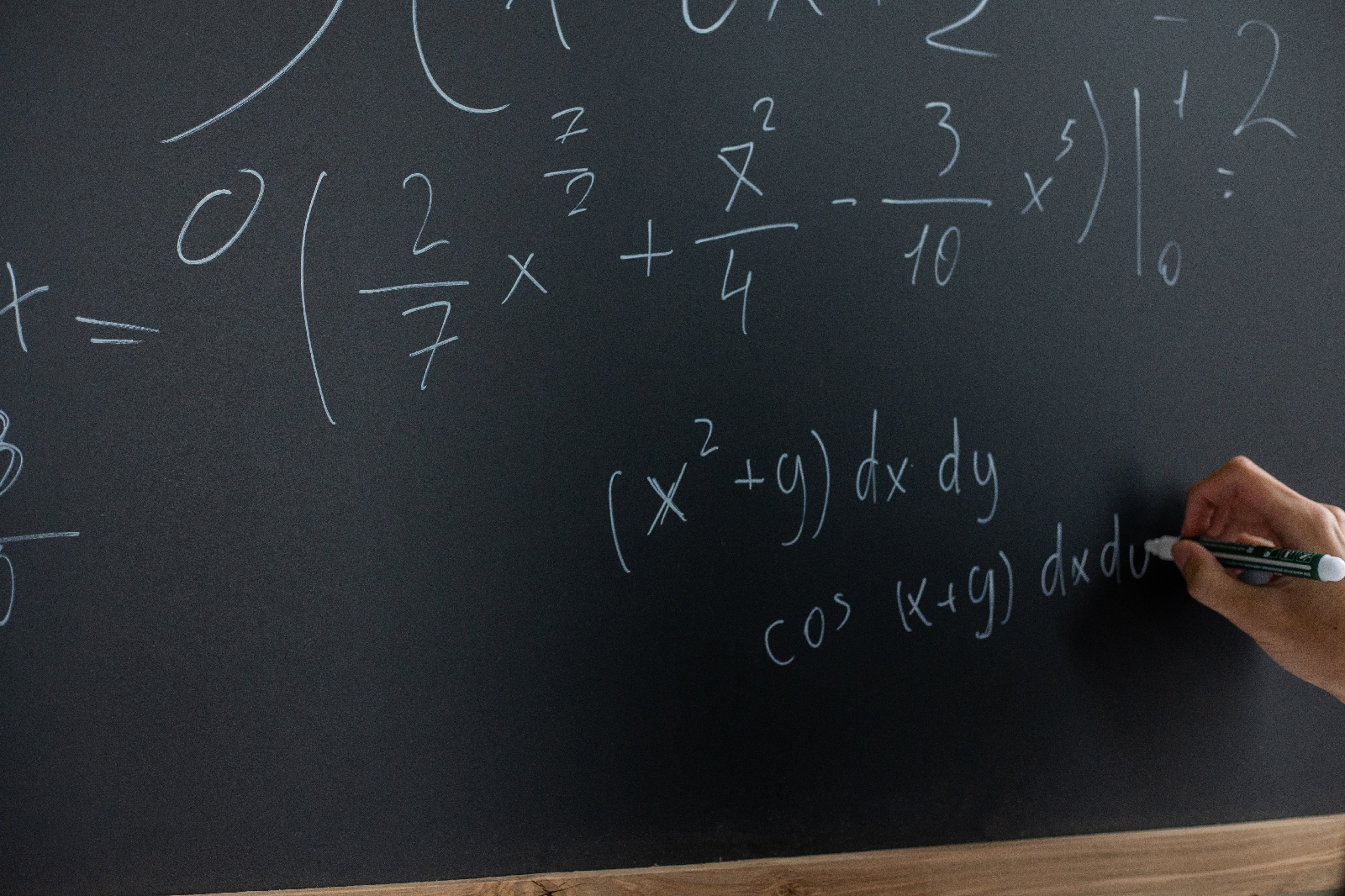
Calculus is perhaps the most important topic you would ever study to understand the concepts of physics.
The question is what is calculus? and why do we need to study it at all?
The answers will be provided in this article which I have written in a very lucid and straightforward way to grasp the basic knowledge of calculus and to know the correct way of advancing knowledge of calculus.
The purpose of this article is not to teach whole calculus and make you fall in expectation that you will learn everything about calculus just in this single article.
You have to do hard work and be curious and consistent to learn it.
You will learn these following objectives in this article:
1. Introduction to calculus .
2. Prerequisites to learn calculus.
3. Basic knowledge of calculus.
4. Differential equations and their applications.
5. Integral equations and their applications.
6. Books to learn calculus.
The article is not very lengthy but trust me you are going to have a better and more reliable understanding of calculus after having read this article entirely.
1. Introduction to calculus:
"Calculus is the study of changes". The 'change' means how one quantity depends on another quantity and how they change together. When you throw a ball upward,the speed of the ball changes continuously and here we can use calculus to calculate the distance moved upward by the ball and also the velocity at any instance. The velocity of ball changes with the change in time .
Calculus involves mainly three important topics: differentiation, integration and differential equation.
2. Prerequisites to learn calculus:
To learn calculus right from the basics,you need to learn these following topics in a systematic way:
1. Limit
2. Types of Functions
3. Continuity of functions.
4. Summation (use of Sigma symbol)
5. Conic sections and its equation
If you have learnt these topics before starting to study differentiation and integration,then you are definitely going to learn calculus in an easy way.It will take some time but in the end,you are going to learn calculus.
3. Basic knowledge of calculus:
In order to begin with, ensure that you have completed the prerequisites of calculus aforementioned.
Once you understand "differentiation",you are ready to learn other topics of calculus.
Well differentiation or sometimes called derivative,is the rate of change of a quantity y with respect to change in other quantity x and we donote it by dy/dx,where y is a function of x. The derivative of a function y gives the slope of y at any particular value of x.
Example: the derivative of displacement x with respect to time t gives velocity,
dx/dt = v.
"Integration" is the opposite of differentiation. To integrate means to add some objects. In the above example, if you integrate dx=vdt ,you will get x=vt+c ,where c is a constant of integration that can be calculated using initial value of x at any instant t.
5. Books to learn calculus:
1. NCERT 11th and 12th maths books.
2. Mathematical tools YouTube video by Alakh Pandey (Physics Wallah).
3. Differential equations by MD Raisinghaniya.
4. Mathematical physics from HC Verma book(Volume 1).
5. Mathematical physics by HK Das.
✓ I have simply given rough introduction to differentiation and integration as it's quite hard to write maths article on mobile phone. All you need to do is Lear the prerequisites from the aforementioned books.
Thank you!
Author: Scientificirfan
Popular posts from this blog
The Concept Of Schrodinger Equation

" The Concept Of Schrodinger Equation" In this blog,you are going to learn the following main topics on Schrodinger equation: 1. Short introduction of quantum mechanics. 2. What is Schrodinger equation? 3. Wave function: an introduction 4. Prerequisites to learn Schrodinger equation. 5. Solution of Schrodinger equation with a simple example. 6. Books to learn quantum mechanics. So let's begin with the short introduction of quantum mechanics. Quantum mechanics is a branch of physics in which we study about the microscopic and non-classical behaviour of the particles like atoms, molecules and other quantum systems. The particles like an electron and photons do not generally obey Newton's laws of motion or Coulomb's law of electrostatics. You know that we use Newton's equations of motion to describe the motion of a planet around the sun,in the same approach,we use an equation called Schrodinger equation to describe the motion of quantum particles like an elect...
Actual Meaning of Battery and EMF

Battery and EMF :- What is battery? What is EMF? Let's have some feeling of these two! A battery is a device which maintains a potential difference between its two terminals A and B. Some " internal mechanism" exerts forces on the charges of the battery material (chemical of the battery). This force drives the postive charges of the battery towards A and the negative charges towards B. The force on a positive charge q is shown as Fb. As positive charges accumulate on A and negative charges on B, a potential difference develops and grows between A and B. An electric field E is developed from A to B and exerts a force Fe= qE on a charge q.The direction of this force is opposite to that of Fb. In steady state, Fb=Fe and so no further accumulation of charge takes place. If a charge q is taken from the terminal B to A , the work done by the battery force Fb is W=Fb(d) where d is the distance between A and B. This work per unit c...
Scientificirfan Biography
Scientific Irfan – Biography Scientific Irfan is an emerging physicist, educator, and science communicator from Patna, Bihar, India. Currently pursuing his Master of Science in Physics at the Indian Institute of Technology (IIT) Guwahati (2024–2026), Irfan is known for his deep curiosity about the universe, innovative teaching style, and commitment to making science accessible. Early Inspiration and Education Irfan’s fascination with the cosmos began in childhood, when he would gaze at the night sky and wonder: “How do these astronomical objects exist?” and “Who created the universe?” Encouraged by a nurturing school teacher, he pursued a BSc in Physics at Patna Science College, Patna University, graduating in 2024 with distinction (CGPA: 8.2/10). He excelled in advanced topics such as Quantum Mechanics, Electrodynamics, and Mathematical Physics. During this time, he conducted a research project on quantum tunneling and created award-winning ...
Comments
Post a Comment